Retiring in Montenegro 2026: Residence, Costs, Towns
Retiring in Montenegro in 2026: the residence basis that fits a retiree, healthcare, the budget lines to plan and the quietest coastal and northern towns.
By MonteStart · Published 24 October 2026 · Updated 24 October 2026 · 12 min read
A couple from Manchester sold a two-bedroom flat in 2025 and bought a house with a sea view above Bar for less than half the price. That is the kind of story that drives interest in retiring in Montenegro, and the numbers behind it are real. What people underestimate is the paperwork: there is no single retirement permit, so the residence route has to be chosen before the first document is ordered. This guide explains the routes, the healthcare picture, the budget lines, the towns and the way we handle the file for you.
Can I retire to Montenegro as a non-EU or EU citizen?
Yes, citizens of EU countries, the United Kingdom, the United States, Canada, Australia, Turkey, Russia and most other countries can retire to Montenegro on a temporary residence permit. Montenegro is not yet an EU member, so EU passports do not give automatic residence, and everyone follows the same permit system. The difference between nationalities lies in visa-free entry periods and in which documents need an apostille, not in whether retiring in Montenegro is possible.
The entry rule most people start with is the visa-free stay. Citizens of the EU, the UK, the US and many other countries may stay up to 90 days in a 180-day period without a visa. That window is long enough to visit, choose a town, sign a lease or purchase agreement and file a residence application in person.
Once the permit is issued, you can stay year-round and leave the country as often as you like. Retirees who want to split the year between Montenegro and their home country should count the days, because long absences can affect renewal. We explain the thresholds for your case during the free consultation.
Which Montenegro retirement visa routes exist in practice?
There is no permit named a Montenegro retirement visa, so retirees use one of the general grounds for temporary residence. Three of them cover almost every retiree we have worked with:
- Property ownership: you own a residential property in Montenegro in your own name
- Family reunification: your spouse, parent or child already holds a Montenegrin permit or citizenship
- Company ownership and directorship: you set up a small company and hold the director position
Each ground leads to a one-year temporary permit that is renewed annually. After five years of continuous temporary residence you may apply for permanent residence, which no longer needs annual renewal.
| Residence ground | Who it suits | What you must hold | Main cost beyond the file |
|---|---|---|---|
| Property ownership | Retirees buying a home | Title deed registered in your name, health insurance, proof of means | The property itself |
| Family reunification | Spouse or parent of a permit holder | The sponsor's permit, civil documents with apostille | Translations and certifications |
| Company and directorship | Retirees who still consult or invest | Registered d.o.o., director appointment, lease | Accounting and director contributions |
| Permanent residence | After five years of temporary permits | Continuous permit history, language test | Application fees |
Property ownership is the route most retirees choose. It does not need an employer, a sponsor or ongoing company costs, and the home you buy becomes the basis of your stay. Our residence permit service covers the full file for this ground, from the first checklist to the collection of the card.
The company route surprises some readers, but it works well for retirees who still take on consulting work or want to manage a rental property through a legal entity. It carries monthly accounting and contribution costs, so we only recommend it when the business activity is real.
What does the property-based residence permit require?
The property-based permit requires a residential property registered in your own name in the land registry, valid health insurance for the whole permit period and proof that you can support yourself without working in Montenegro. The file also includes your passport, a criminal record certificate with apostille from your home country and a registered address in the municipality where you live.
A few points shape how we plan the application:
- The property must be residential and registered to you personally, not to a company
- The title transfer at the cadastre must be complete before filing, which can take weeks after signing
- Health insurance must cover Montenegro and the full twelve months of the permit
- Proof of means can be a pension statement, bank balance or both, confirmed case by case
- Biometrics are taken in person at the police directorate in your municipality
The sequence matters more than the speed. Retirees who buy first and then start on documents often lose a month waiting for the apostilled criminal record certificate. We ask you to order it the day you decide to move. The purchase process itself is covered in our guide to buying property in Montenegro as a foreigner, including the taxes and the role of the notary.
If you prefer to rent for a year before you buy, that is a sensible way to test a town. In that case the first permit usually goes through family reunification or the company route, and the property route follows after the purchase.
How does healthcare work for retirees in Montenegro?
Healthcare for foreign retirees in Montenegro runs on two layers: the private insurance that your residence permit requires and the public and private clinics you use in daily life. Public healthcare is funded through contributions, so a retiree who is not employed in Montenegro generally does not join the public fund in the first years. Private insurance fills that gap and is a standard part of every permit file we prepare.
The practical picture is better than many people expect when retiring in Montenegro:
- Pharmacies are everywhere in coastal towns and sell most common medication at prices lower than in Western Europe
- Private clinics in Podgorica, Budva, Bar and Herceg Novi offer general practice, dentistry, imaging and specialist consultations with short waiting times
- Public hospitals in Podgorica, Kotor, Bar and Nikšić handle emergencies and in-patient care; the Clinical Centre in Podgorica is the main referral hospital
- Dentistry is a reason some retirees visit before they move: quality is good and prices are moderate
Retirees with ongoing conditions should bring a translated summary of their medical history and a supply of their regular medication for the first months. Pharmacists can usually match a foreign brand to the local equivalent. For complex treatment, Belgrade and Zagreb are a short flight away, and many private insurers cover both.
Insurance terms vary by age and by whether pre-existing conditions are covered. We work with insurers who issue policies that the police directorate accepts for permit purposes, and we tell you the cover you need before you buy a policy.
What is the cost of living for retirees in Montenegro?
The cost of living for retirees in Montenegro is lower than in most of Western Europe, with housing, dining, local produce and services making up most of the difference. Imported goods, cars and electronics cost about the same as elsewhere in Europe. The honest way to budget is by category, because the gap between a flat in Budva in August and a house in Kolašin in February is wide.
| Budget category | What drives the cost | Where retirees save most |
|---|---|---|
| Housing | Coast versus inland, sea view, season | Owning outright, towns outside Budva and Kotor |
| Utilities | Electricity for heating or cooling, water, internet | Insulated homes, heat pumps instead of electric radiators |
| Food | Local produce versus imported brands | Green markets, local wine, seasonal fish |
| Health | Private insurance premium, dental care | Local pharmacies, annual check-ups at private clinics |
| Transport | Owning a car, fuel, bus and ferry | Living in a walkable town, using the coastal bus line |
| Leisure | Eating out, cafes, culture, travel | Off-season living, local restaurants |
Housing is the line that moves everything else. A retiree who owns a home and lives outside the three busiest coastal towns can live comfortably on a pension that would feel tight in the UK, Germany or the Netherlands. A retiree renting a sea-view flat in Kotor in high season pays rates close to Western European cities.
Electricity is the utility to watch. Most Montenegrin homes heat and cool with electricity, and winter bills in a poorly insulated house can surprise newcomers. Ask about insulation and heating type before you buy, not after.
For a full picture of day-to-day prices by city, our article on living in Montenegro walks through the main towns. The figures there apply to retirees as much as to working residents.
Where are the best places to retire in Montenegro?
The best places to retire in Montenegro are the quieter coastal towns, Herceg Novi, Tivat, Bar and Ulcinj, plus the northern mountain towns of Kolašin and Žabljak for retirees who want cool summers and lower prices. Budva and Kotor remain popular but are crowded from June to September, so many retirees treat them as places to visit rather than live.
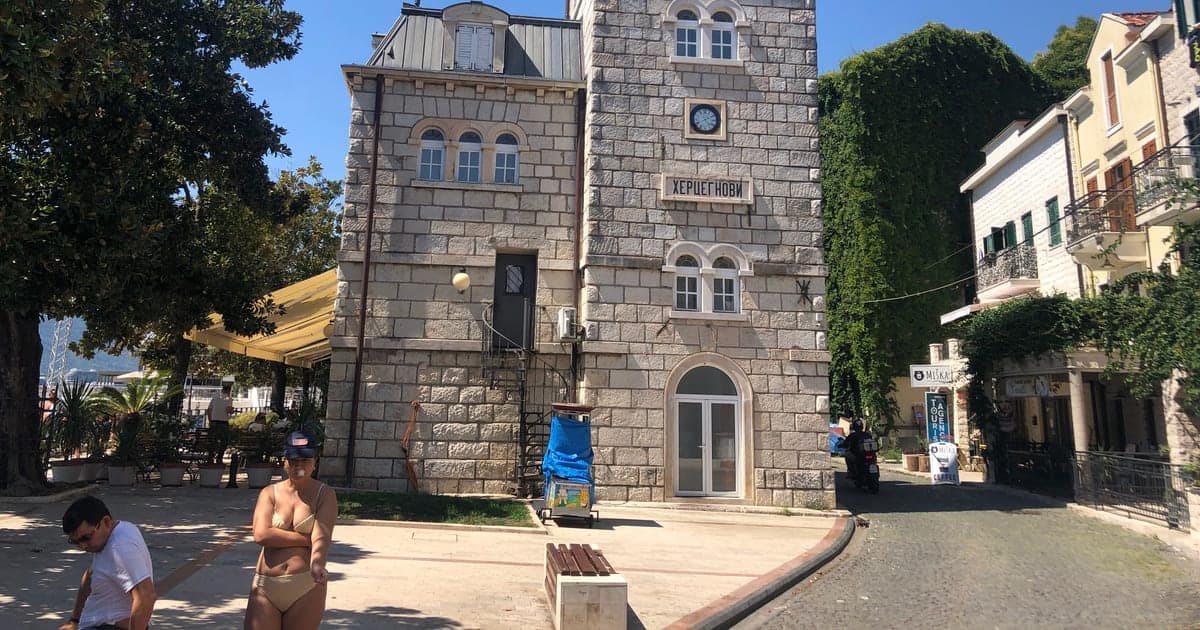
Herceg Novi sits at the entrance to the Bay of Kotor, faces south and catches the most sun on the coast. It has a long seaside promenade, a stepped old town, a sizeable foreign community and the mildest winters. Dubrovnik airport is under an hour away, which matters for family visits.
Tivat is the most international town on the bay. The Porto Montenegro marina brought restaurants, a private clinic and an English-speaking community. The airport is on the edge of town, so the journey home is short. Prices near the marina are high; the villages around Tivat are calmer and cheaper.
Bar is a working town with a long sandy coastline, a ferry to Italy, a railway to Belgrade and the lowest coastal prices for property. The old town above the city and the olive groves around Stari Bar attract retirees who want a real town rather than a resort. The Manchester couple from the introduction chose this area for exactly that reason.
Ulcinj at the southern tip has a 12 km sandy beach, a strong Albanian cultural layer and the warmest sea. It is quieter and more affordable than anything further north, and the Albanian border and Tirana airport are close.
Kolašin and Žabljak in the north suit retirees who grew up with real winters. Kolašin has a ski resort, a railway station and clean mountain air at about 1,000 metres. Žabljak sits at the edge of Durmitor National Park. Property and living costs here are well below the coast, and summers are cool when the coast is at 35°C.
Podgorica, the capital, is rarely a first choice for retirees, but it is the place for hospitals, embassies and the main residence office. Many retirees on the coast keep it within a 90-minute drive for that reason.
What is the climate like through the year for a retiree?
The coast has a Mediterranean climate with hot dry summers, mild wet winters and long shoulder seasons that most retirees consider the best months. Spring and autumn on the Adriatic bring daytime temperatures from 18°C to 25°C, swimming from May to October and far fewer visitors than July and August.
Winter on the coast is mild but rainy. The Bay of Kotor in particular receives heavy rain in November and December, and the mountains behind it create microclimates from one village to the next. Herceg Novi and Ulcinj see more sun than the inner bay.
Inland and in the north, winters are real. Snow falls in Kolašin and Žabljak from December to March, roads are kept open and the ski season runs through February. Podgorica has hot summers above 35°C and cool winters without much snow.
The practical advice for anyone retiring in Montenegro is to visit in the season you fear most before you buy. If you dislike heat, come in late July. If you dislike rain, come in November. The town that still feels right in its worst month is the right town.
How do retirees settle into daily life and community?
Retirees settle fastest in towns with an established foreign community, a walkable centre and regular contact with neighbours, which is why Herceg Novi, Tivat and Bar come up again and again. English is widely spoken in coastal towns, especially among people under forty, and German, Italian and Russian are common in service businesses.
A few habits make the first year easier:
- Learn greetings and numbers in Montenegrin; markets, cafes and municipal offices respond warmly to the effort
- Register with a local general practitioner early rather than waiting for a problem
- Join the local foreign residents group for your town; most have active online communities that share practical help
- Open a local bank account soon after the permit is issued, since many bills are paid by standing order
- Keep a folder with certified copies of your permit, passport and title deed; you will be asked for them more than you expect
Family matters a great deal in Montenegrin life, and retirees who want to bring a spouse or an adult child find the system accommodating. The route is described in our guide to family reunification in Montenegro, and we normally prepare the spouse's file at the same time as the main applicant's so both permits are issued in the same cycle.
Montenegro's path towards EU membership is also part of the long-term picture for anyone planning fifteen or twenty years here. Accession would change travel rules and eventually the currency framework, though Montenegro already uses the euro. The direction of travel is steady, and retirees are among the groups that benefit most from closer alignment.
Plan your retirement in Montenegro with the right permit from day one
Retiring in Montenegro works best when the residence ground is chosen before the first document is ordered, because the apostilled criminal record certificate, the insurance policy and the property registration each take weeks and must line up. We handle that sequence for retirees every month: we confirm the ground that fits you, send a document checklist for your country, book the notary and translations, file the application and collect the card.
Tell us three things: your nationality, whether you plan to buy or rent in the first year and whether a spouse or family member will move with you. You will receive the exact route, the document list and a start date in writing. The first conversation is free, and you can reach us through the contact page or on WhatsApp at any time.
By the MonteStart team
Certified Montenegrin accountants and relocation consultants in Podgorica since 2015. Each guide follows the same rules we apply to our own clients' files.